


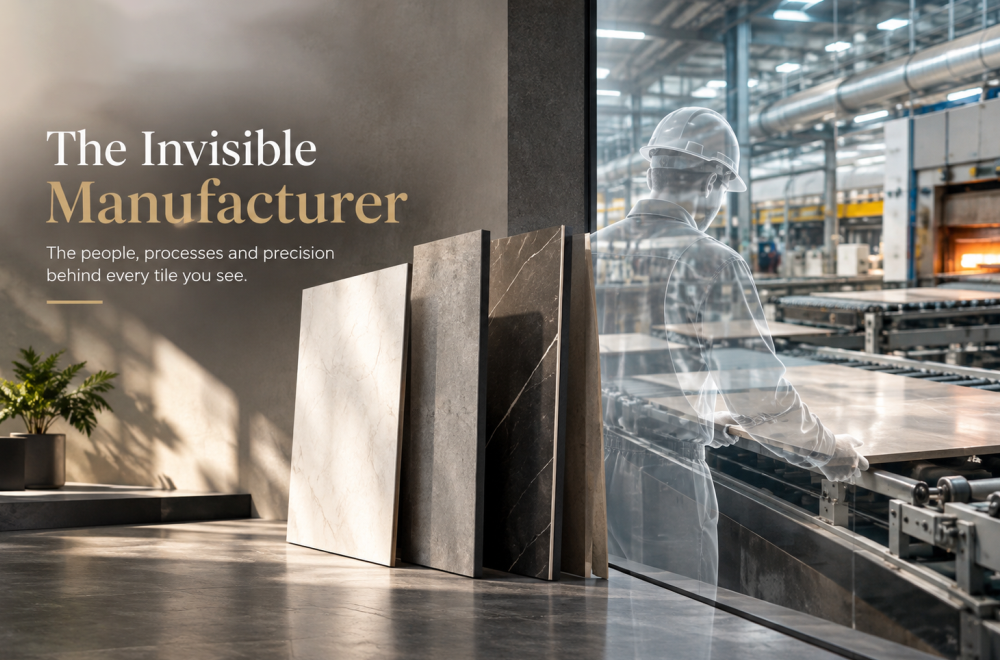


The old craft of ceramics has developed over the ages to include new technology and decorating methods. Digital inks are one of the many breakthroughs that have significantly changed the ceramics industry.
Ceramic printing was formerly restricted to conventional methods like screen and offset printing, but the advent of digital ink has created an endless array of artistic opportunities. They have completely changed the ceramics industry by turning plain surfaces into intricate, one-of-a-kind pieces of art.
Since ceramic inks provide customized solutions to meet design and functional requirements, they are much contemplated for increased adoption across B2B industries. With ceramic inks, firms can do custom designs on ceramic items like tiles and dinnerware that are made to serve according to corporate identity or the requirements of a project.
Furthermore, innovations such as functional ceramic inks serve specific markets, such as electronics and healthcare, improving product competitiveness and performance. In this blog, we will delve into ceramic inks and the top trends in the domain.
 Nikhil Kaitwade (Associate Vice President at Future Market Insights, Inc.) has over a decade of experience in market research and business consulting. He has successfully delivered 1500+ client assignments, predominantly in Automotive, Chemicals, Industrial Equipment, Oil & Gas, and Service industries.
His core competency circles around developing research methodology, creating a unique analysis framework, statistical data models for pricing analysis, competition mapping, and market feasibility analysis. His expertise also extends wide and beyond analysis, advising clients on identifying growth potential in established and niche market segments, investment/divestment decisions, and market entry decision-making.
Nikhil holds an MBA degree in Marketing and IT and a Graduate in Mechanical Engineering. Nikhil has authored several publications and quoted in journals like EMS Now, EPR Magazine, and EE Times.
BOUT FUTURE MARKET INSIGHTS INC.
https://www.futuremarketinsights.com/
Future Market Insights Inc. is an ESOMAR-certified business consulting & market research firm, a member of the Greater New York Chamber of Commerce and is headquartered in Delaware, US. We have been collaborating with global enterprises in their business transformation journey and helping them deliver on their business ambitions. 80% of the largest Forbes 1000 enterprises are our clients with 75% renewal rate. We named “Market Research Brand of the year” in the year 2015. Globally recognized as Clutch Leader 2022 in business consulting on account of high client satisfaction score 4.9/5.
The 2023 Asia Pacific Stevie Awards recognized us as the Thought Leadership Campaign of the Year—The Plant Based Revolution and in the 20th Annual IBAs, we honored with Bronze Stevie Award Winner for Thought Leadership in Sustainable Packaging.
What is Ceramic Ink?
Ceramic ink is a suspension comprising a liquid component, called the solvent combination, a solid component, and a dispersion agent or pigment or the substance. A ceramic pigment includes metallic oxides combined with other inorganic substances that impart to the ink all the good characteristics associated with color, opacity, and thermal stability. It becomes the duty of the dispersion component to maintain the uniformity of submicron solid particle distribution with the suspension in ink during its fire process. This helps to create good adhesion to the ceramic surface. Solvents are added to the ink to dilute it for ease of application and quick drying. During firing, there is a chemical change in the ceramic inks in which the solvent blend burns out, leaving the ceramic pigment truly bonded to the ceramic object’s surface. This makes the ceramic ink exceptionally durable over a long period and resistant to high temperatures, making it very suitable for modifying and decorating ceramics.Nanotechnology Use in Ceramic Inks
Nanotechnology applications are surely one of the most innovative and cutting-edge technologies that are currently changing the ceramic ink market, helping to improve performance and ink characteristics. Nanotechnology changes the material at a very small scale, typically between 1 and 100 nanometers. This will allow for very accurate control over the composition and behavior of inks. Thanks to this development, it will be able to add better qualities to ceramic inks, like improving resistance to degradation and chemicals, color brightness, and durability. Ferro Corporation leads by example in business with the strides it is making in nanotechnology in ceramic inks. Using nanotechnology, Ferro has developed ceramic ink formulations with a variety of advantages over traditional inks. Such inks enhance adhesion on ceramic surfaces using nanoparticles and print finer details, acquiring higher mechanical strength after fire. Besides, at a nanoscale, these particles aid in sustainability processes for industrial processes by allowing raw resources to be used more effectively. Companies like Ferro are stretching ceramic inks to their limits through nanotechnology. It has opened a wide range of new avenues for both product performance and design flexibility in a variety of applications, from architectural ceramics to dinnerware and tiles. The progress leading toward more sophisticated and advanced solutions confirms that the ceramics industry aims to cover the ever-growing needs of production and consumers seeking quality and innovation.Conductive Ceramic Inks
Another unique and growing technology within the ceramic ink business is the introduction of conductive ceramic inks. These are specially designed inks that can embed conductive ingredients like metallic particles or even carbon nanotubes, which can form printed circuits with other electronic components right on the ceramic substrates. Leading companies like DuPont are extending conductive ceramic inks into automotive and electronics applications. These inks are used to print electronic components on ceramic surfaces, mainly sensors, capacitors, and conductive traces. Among the many benefits associated with this technology is the direct integration of electronic functions into ceramic products, which reduces assembly complexity while increasing reliability. Conductive ceramic inks enable a host of new innovative applications for traditional ceramics, merging electrical functionality with traditional ceramic materials. This opens up prospects for such applications where resilient and temperature-resistant polymers play an important role: sensor technologies, Internet of Things devices, and automotive electronics. The development of such complex ceramic inks proves the industry’s response to modern technological requirements, harmoniously blending ancient ceramic workmanship with advanced electronic capabilities to meet the needs of an ever-networked society.Future Scope of Ceramic Inks
The future does look very promising for ceramic inks, and this is because more and more sectors are using them. One key trend at the moment is the continuous development of digital printing technology. Improved inkjet technologies will cater to increased demand for complicated and personalized patterns in architectural ceramics, tiles, and ornamental items through finer details, wider color gamuts, and quicker production rates. Another significant trend is the increasing interest in functional ceramic inks. More and more, such specially designed inks offer antimicrobial surfaces or self-cleaning properties, with some even including conducting functions for electronics. This development is driven by their growing use in cutting-edge applications in the electronics, aerospace, and healthcare sectors. Moreover, ceramic inks will be powerfully influenced by sustainability in their future development. Trends in environmentally friendly formulations are oriented to recyclable materials, less energy, and reduced emissions, and thereby their harmful impact on the environment will be reduced. Businesses are investing money in research to develop non-toxic and biodegradable ceramic inks that work well with strict environmental standards. It is a future of excellence—driven by functional innovations, digital printing, and a strong approach to sustainability. This has the potential to revolutionize the ceramics sector with fresh opportunities in imagination for design, practical integration, and ecologically clean production techniques.By Nikhil Kaitwade, Associate Vice President at Future Market Insights
Nikhil Kaitwade (Associate Vice President at Future Market Insights, Inc.) has over a decade of experience in market research and business consulting. He has successfully delivered 1500+ client assignments, predominantly in Automotive, Chemicals, Industrial Equipment, Oil & Gas, and Service industries.
His core competency circles around developing research methodology, creating a unique analysis framework, statistical data models for pricing analysis, competition mapping, and market feasibility analysis. His expertise also extends wide and beyond analysis, advising clients on identifying growth potential in established and niche market segments, investment/divestment decisions, and market entry decision-making.
Nikhil holds an MBA degree in Marketing and IT and a Graduate in Mechanical Engineering. Nikhil has authored several publications and quoted in journals like EMS Now, EPR Magazine, and EE Times.
BOUT FUTURE MARKET INSIGHTS INC.
https://www.futuremarketinsights.com/
Future Market Insights Inc. is an ESOMAR-certified business consulting & market research firm, a member of the Greater New York Chamber of Commerce and is headquartered in Delaware, US. We have been collaborating with global enterprises in their business transformation journey and helping them deliver on their business ambitions. 80% of the largest Forbes 1000 enterprises are our clients with 75% renewal rate. We named “Market Research Brand of the year” in the year 2015. Globally recognized as Clutch Leader 2022 in business consulting on account of high client satisfaction score 4.9/5.
The 2023 Asia Pacific Stevie Awards recognized us as the Thought Leadership Campaign of the Year—The Plant Based Revolution and in the 20th Annual IBAs, we honored with Bronze Stevie Award Winner for Thought Leadership in Sustainable Packaging.